Still Frames, Moving Systems: Photographing the Sydney Olympic Park Train Station
16.07.2026
/
4 min
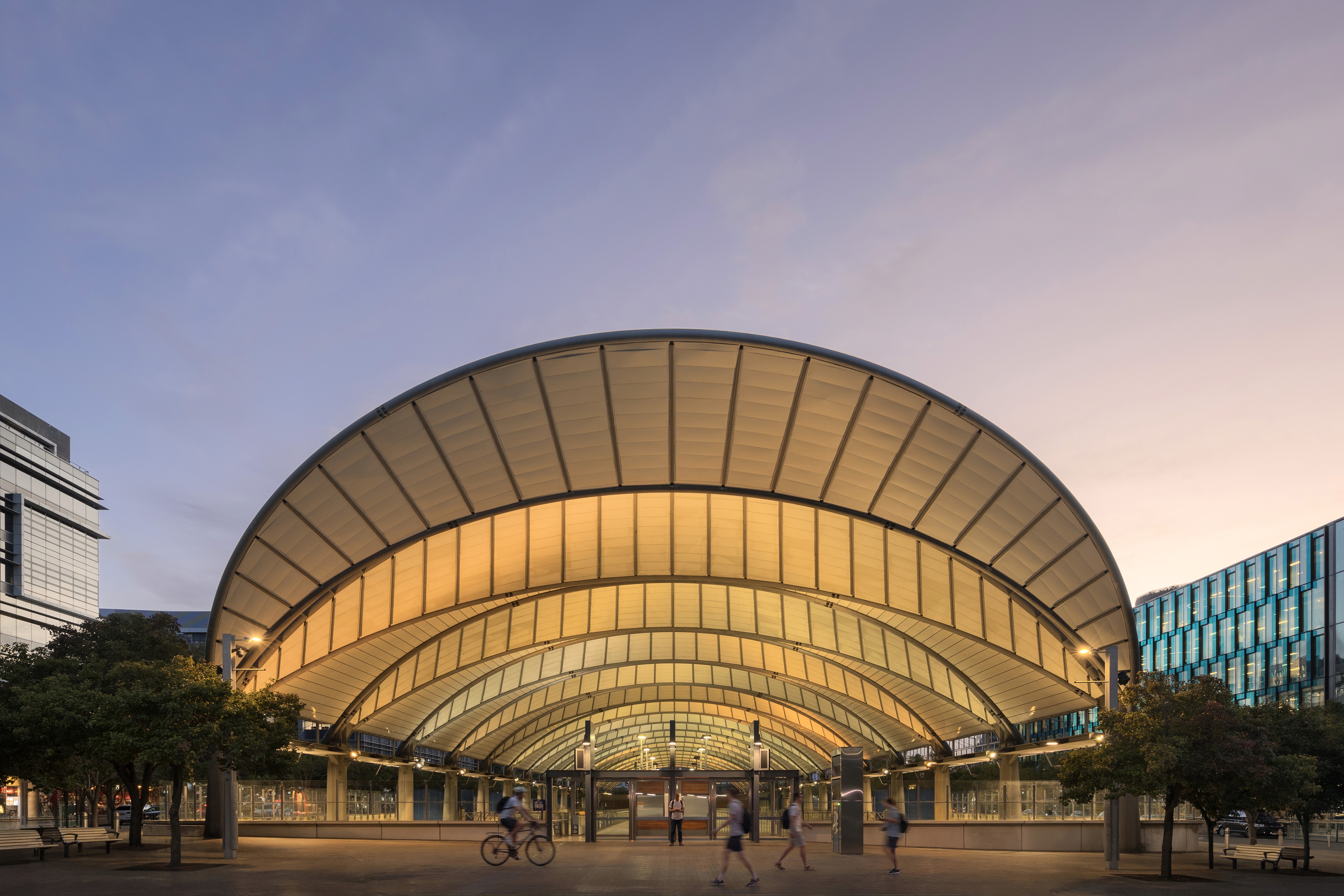
In photo: Sydney Olympic Park Train Station at dusk, where its arched roof and structural rhythm define a high-performance transport hub, captured in motion to reveal how contemporary transport architecture supports real-world circulation and spatial performance.
Most architecture is photographed as if it’s meant to stop. Transport architecture never does.
Train stations are designed around movement of people, trains, light, and time. Olympic Park Train Station only fully reveals itself when it’s active. Empty, it feels unresolved. In use, its logic becomes clear.
Photographing a space like this requires a different approach. The goal isn’t to isolate architecture as a pristine object, but to understand how it performs. A photograph may be still, but the architecture is always in motion.
Photographing Use, Not Just Form
Public architecture is defined by what passes through it.
At Olympic Park, scale is understood through commuters crossing platforms. Proportion becomes legible as people move through the frame. Light shifts constantly, responding to time of day, crowd density, and the rhythm of arrivals and departures.
Removing people from these spaces can flatten them. Movement isn’t visual noise, it’s evidence of design intent at work. It shows how the building was meant to be read and used.
In this context, architectural photography moves beyond documentation. It becomes interpretation: translating lived experience into a single frame.
Stillness Versus Flow
There’s an inherent tension in photographing dynamic spaces with a static medium.
Traditional architectural imagery values control and emptiness. Transport architecture is shaped by flow, repetition, and intensity. Rather than resisting movement, we observe it.
Where does circulation accelerate? Where does it pause? How does the architecture absorb crowds without losing clarity during peak hours?
The focus shifts from staging perfection to recognising performance. What matters isn’t how the space appears when nothing is happening, but how it holds together when everything is.
Repetition as Structure
In high-movement environments, repetition becomes the anchor.
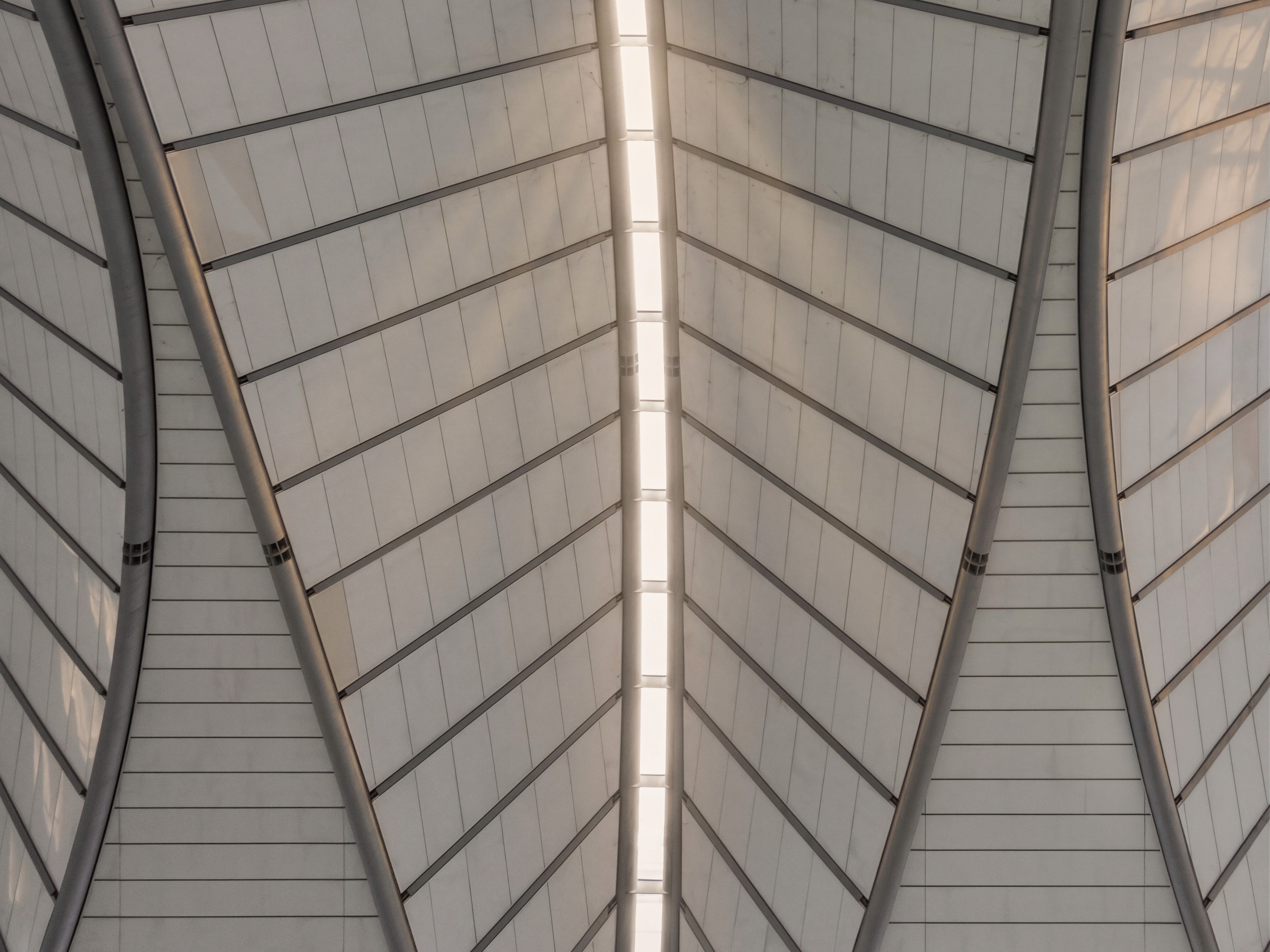
In photo: Repetition along the roof spine and structural ribs establishes a clear visual order which greatly assists in guiding wayfinding, reinforcing spatial rhythm, and anchoring constant movement within the station’s high-flow environment.
At Olympic Park Train Station, columns, roof structures, platforms, and structural bays repeat with clear intent. These elements create order, reinforce wayfinding, and maintain legibility as activity increases.
From a photographic perspective, repetition gives movement somewhere to pass through. Trains blur. People cross. Light changes. The architecture remains constant.
Keeping People Present, Without Taking Over
People activate space, but the architecture leads.
Human movement introduces scale, tempo, and occupation. The architecture absorbs that movement, organising it through structure and proportion. This balance keeps the focus on design intent, using human presence to clarify the space rather than compete with it.
Movement as a Design Tool
Human movement often explains architecture more clearly than drawings ever could.
Commuter behaviour reveals circulation. Arrivals and departures clarify structure. Changing light reveals material, depth, and proportion over time.
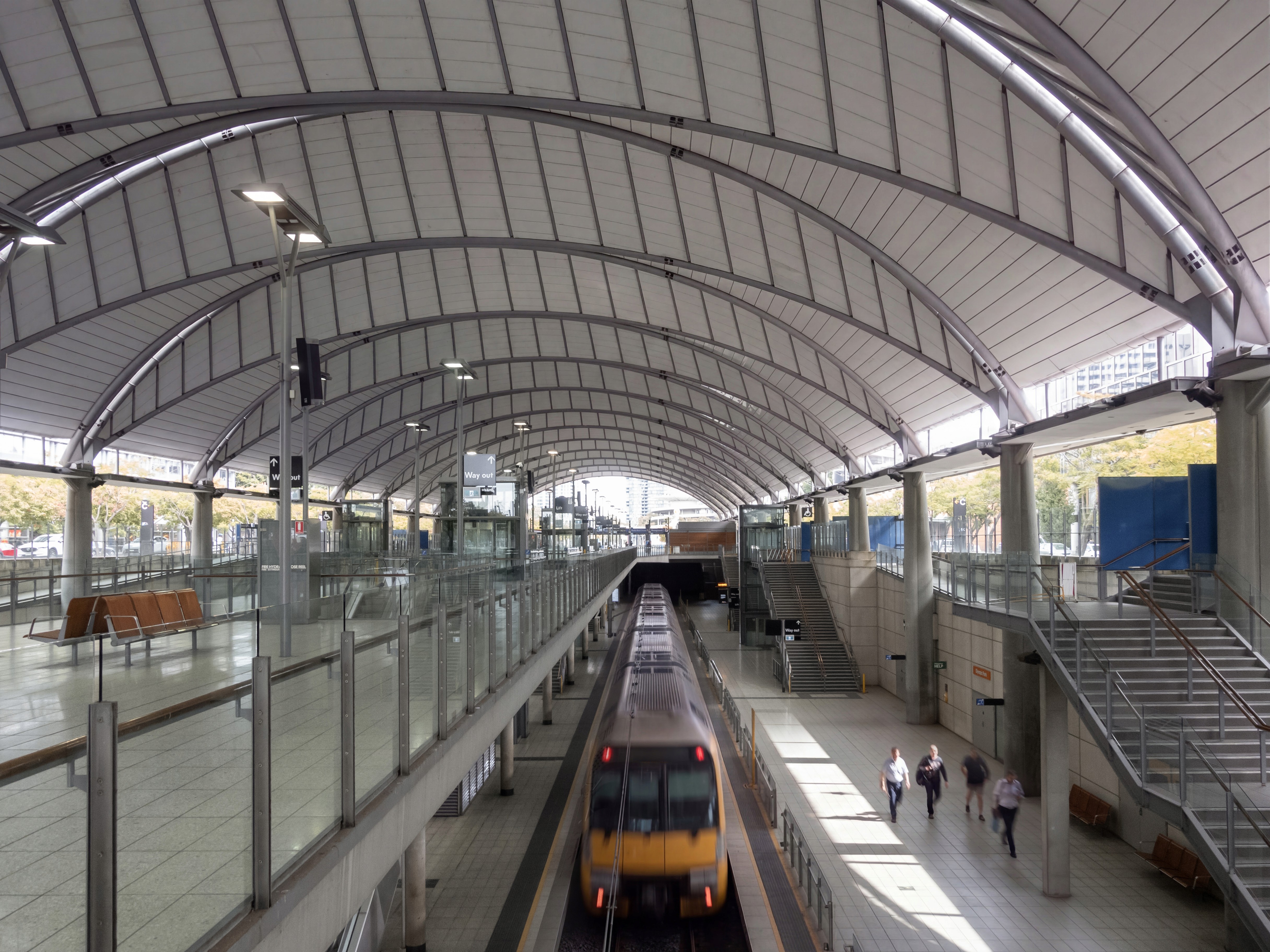
In photo: Train movement and commuter flow make circulation legible, revealing how the station’s section, platforms, and vertical connections are structured to support continuous, real-time use.
Photographing these moments isn’t about capturing events, it’s about understanding how people intuitively navigate space. In that sense, photography becomes a way of testing how well the architecture works.
Architecture as It’s Meant to Be Experienced
Architecture is ultimately understood through use. In spaces defined by movement, performance tells the truth, revealing how circulation, structure, and material choices work together under real conditions.
[ Other magazine ]