The Void and the Vessel: Subterranean Brutalism at MONA
16.07.2026
/
4 min
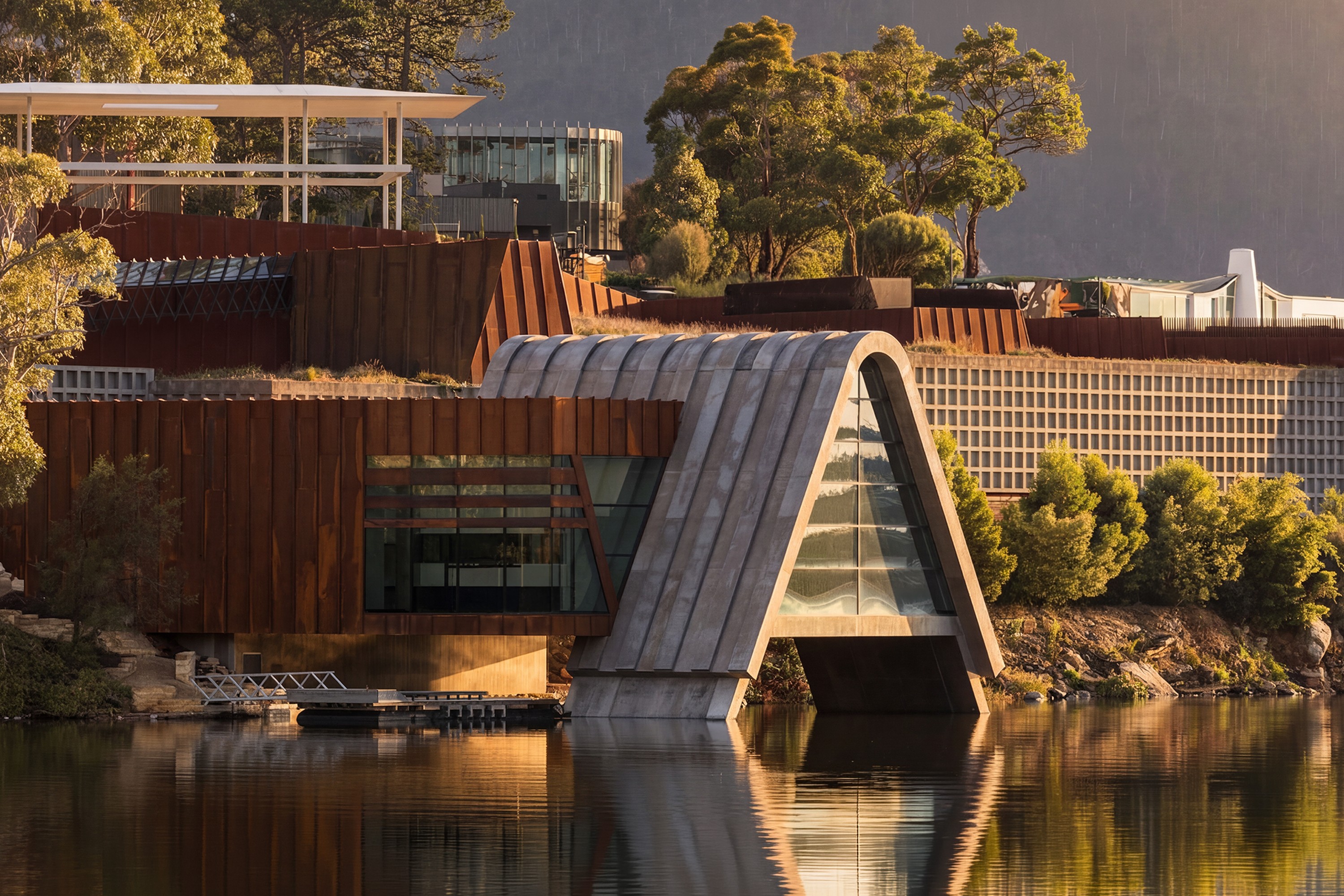
In photo: Weathered Corten steel exterior of the Museum of Old and New Art (MONA) overlooks the Derwent River in Hobart, Tasmania. Designed by Fender Katsalidis, the industrial structures mark the entrance to a vast, subterranean gallery carved into the sandstone cliffs. © Continuous Creative
Most museums are designed to be looked at.
MONA is designed to be felt.
The experience begins with a quiet surprise. You arrive at what seems like a modest building, but once inside, everything shifts. The ground drops away and you descend 17 metres into a void carved from ancient sandstone.
This isn’t just a museum. It feels like stepping into something buried; quiet, dark, and removed from the surface. It leaves the familiar behind and pulls you into something heavier, more atmospheric, and more deliberate.
Rethinking the Traditional Gallery
For decades, galleries have followed a familiar formula: white walls, even lighting, and a neutral backdrop for art.
MONA rejects that entirely.
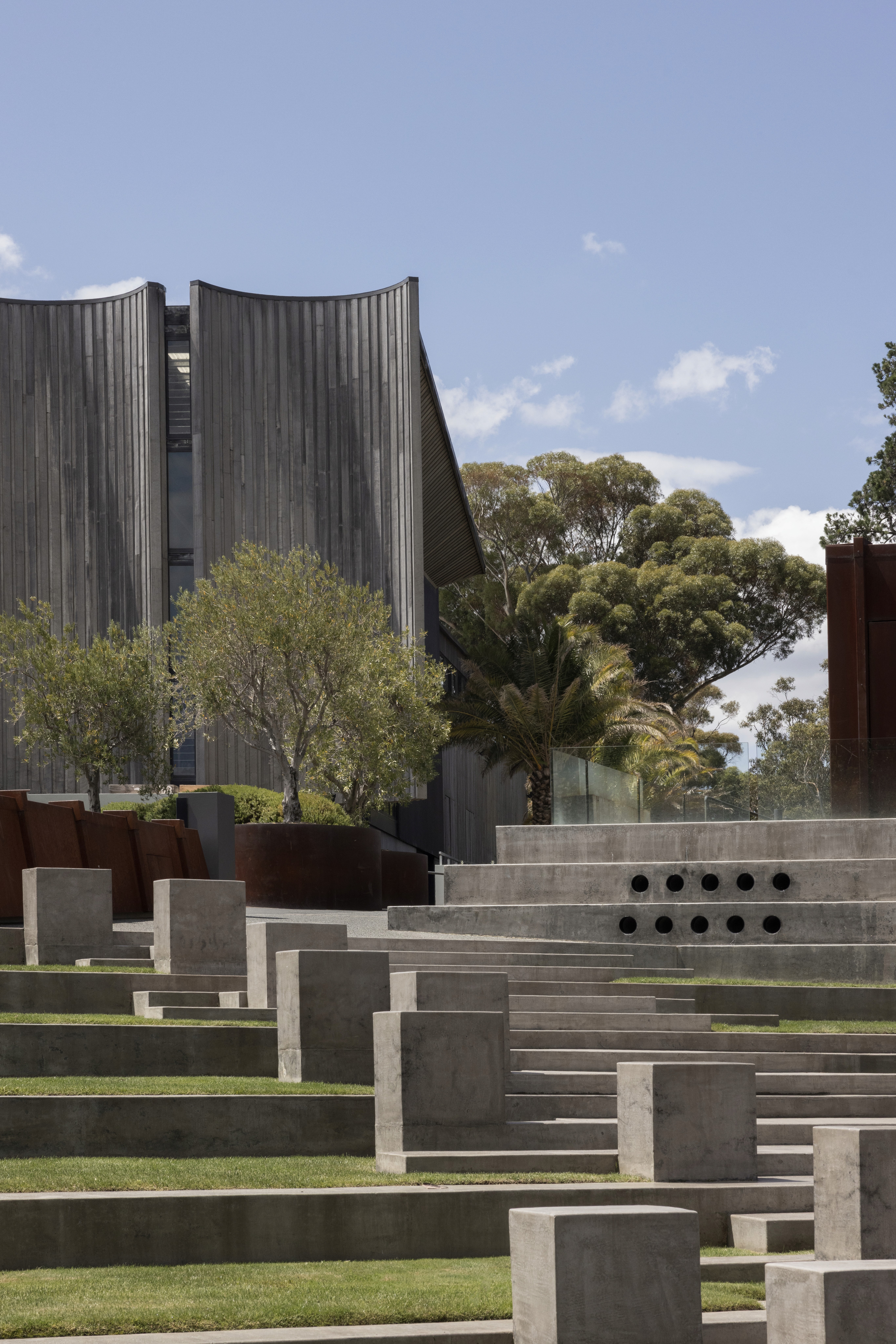
In photo: Tiered concrete steps and open plazas replace the classic "white cube" lobby, blurring the line between public park and private gallery to encourage a more communal, uninhibited engagement with art. © Continuous Creative
Rather than sitting on the landscape, the museum is carved into it. There are no windows, no fixed path, and no clear direction. Visitors move freely, without a prescribed route.
This is intentional. Without the usual structure, you become more aware, more present. You stop following instructions and start responding to the space.
Movement here isn’t guided. It’s instinctive.
Here, architecture doesn’t just hold the art, it shapes how it’s experienced.
Materials That Tell a Story
What gives MONA its presence is its material honesty.
The palette is restrained, but deeply expressive:
Rough sandstone, ancient and sometimes damp to the touch
Weathered steel with a raw, industrial edge
Smooth concrete set against the ruggedness of the rock
Nothing is overly polished. Nothing is concealed. Every surface carries weight, texture, and time.
It’s less about seeing, more about sensing.
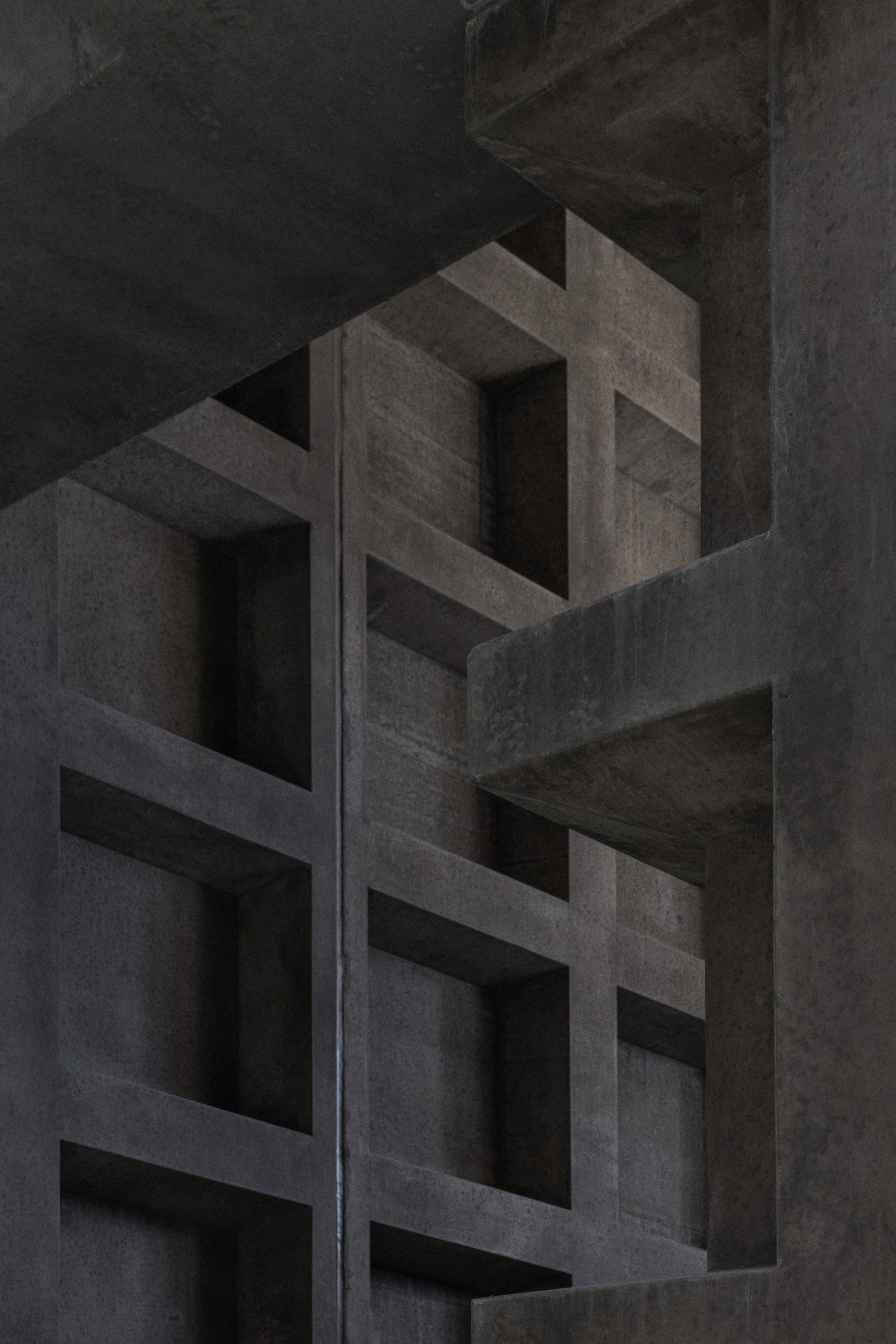
In photo: Raw off-form concrete creates a brutalist grid of light and shadow. These deeply recessed coffers emphasize the museum’s structural weight, echoing the subterranean galleries' cavernous, monolithic feel. © Continuous Creative
Capturing the Space
Photographing MONA requires a different approach.
Without natural light, everything depends on how shadow is handled. It’s not just about documenting the space, but translating its atmosphere.
Three things become essential:
Light and shadow shape depth and guide the eye
Texture allows the material to come through the image
Scale, often through a single figure, reveals the true size of the space
In a place like this, photography stops being descriptive and starts becoming interpretive.
Technology That Steps Back
MONA also removes something we often expect: wall labels.
Instead of placing text beside each artwork, information is delivered through a handheld device. The walls remain uninterrupted, allowing the architecture and artwork to speak without distraction.
It changes how people move through the space. Rather than being directed, visitors navigate instinctively, forming their own connections as they go.
Architecture That Stays With You
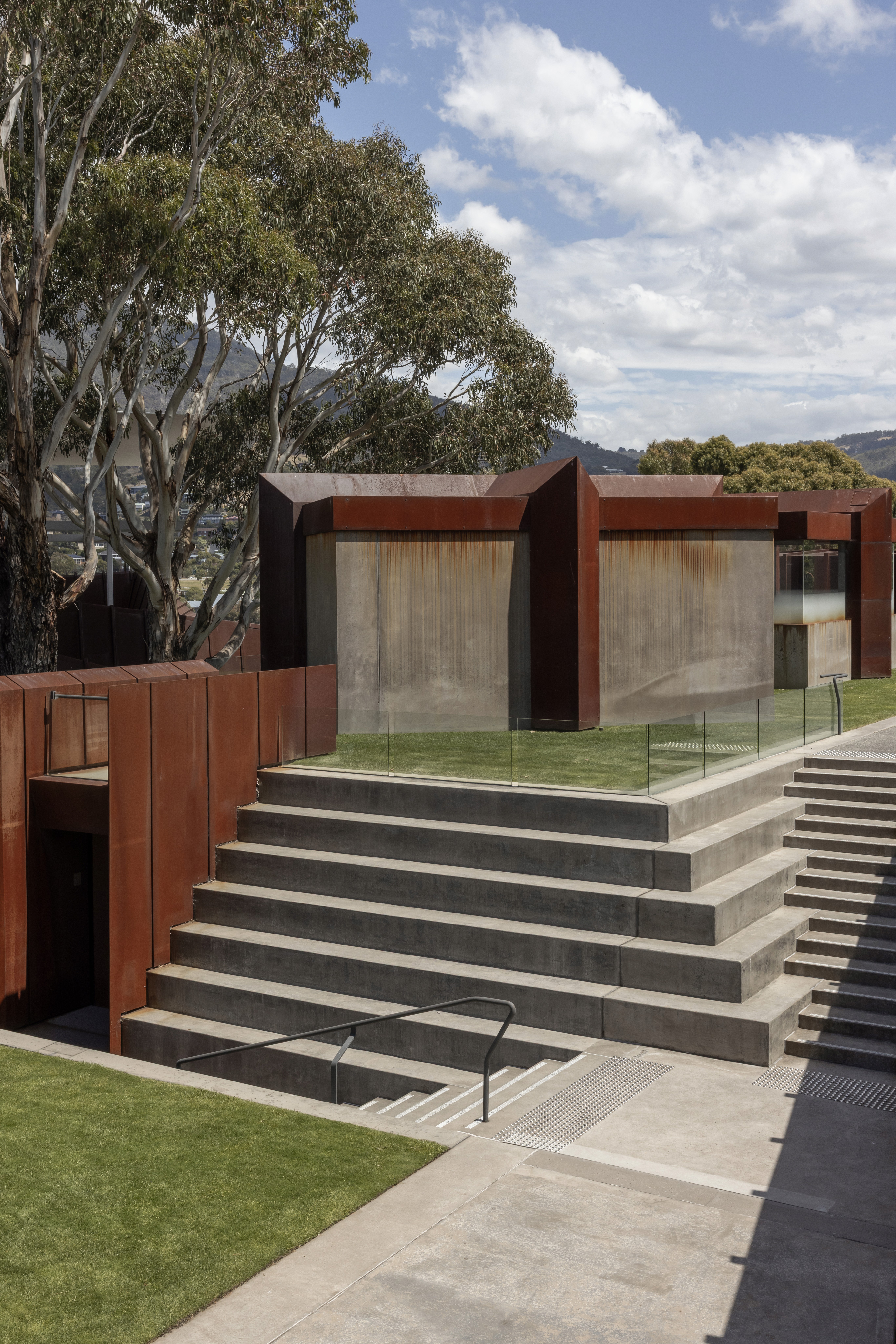
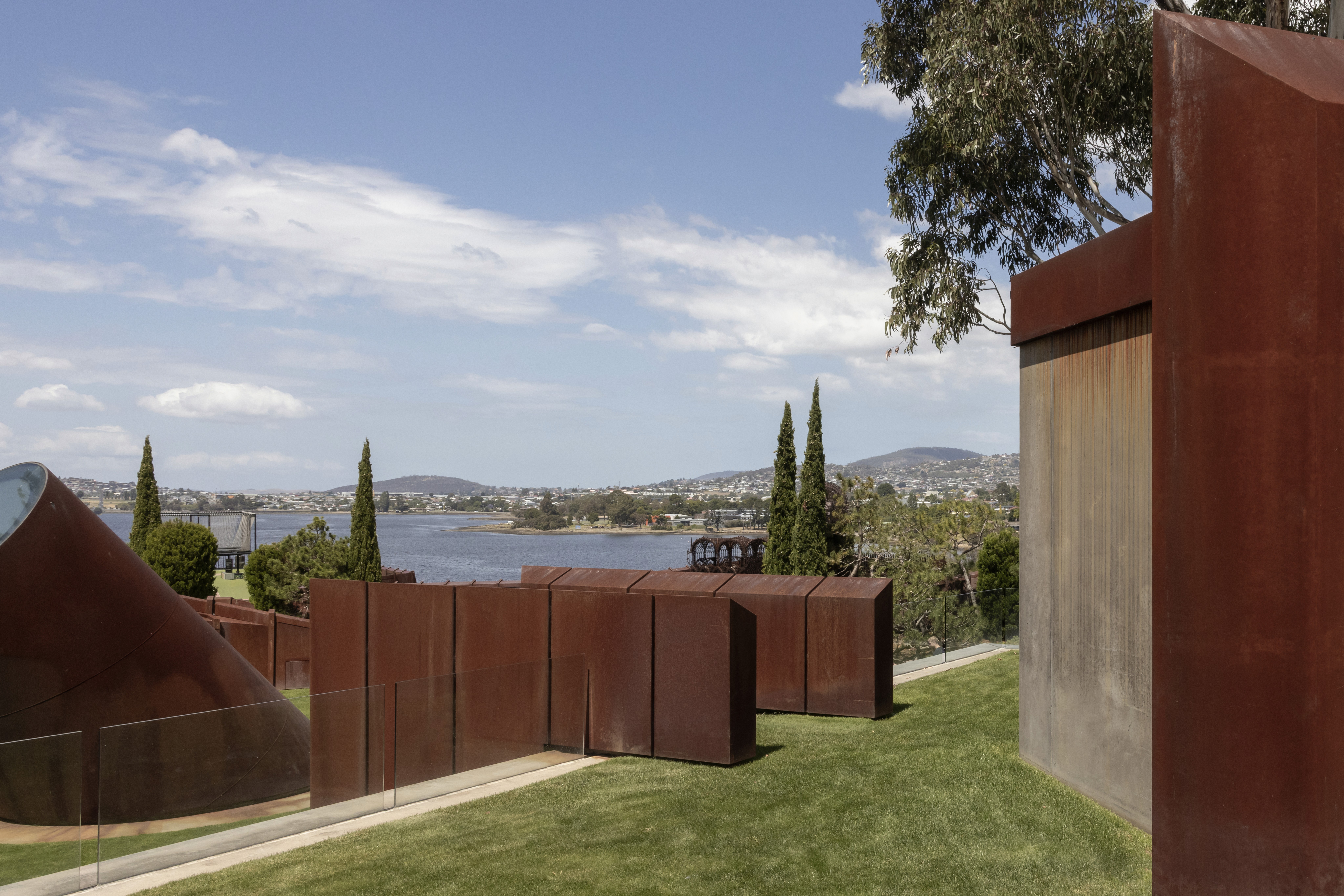
In photo: Where rusted Corten steel meets the open terrain, the architecture remains a bold, uncompromising intervention in the Tasmanian landscape. © Continuous Creative
MONA shows that powerful spaces aren’t always comfortable ones.
Sometimes it’s the unfamiliar, the compression of space, the absence of light, and the loss of direction that leaves the strongest impression.
By bringing together architecture, psychology, and storytelling, MONA creates an experience that doesn’t resolve itself easily.
It stays with you because it never fully explains itself.
[ Other magazine ]