Photographing Sydney Modern: Capturing the Architecture of the Public Realm
16.07.2026
/
4 min
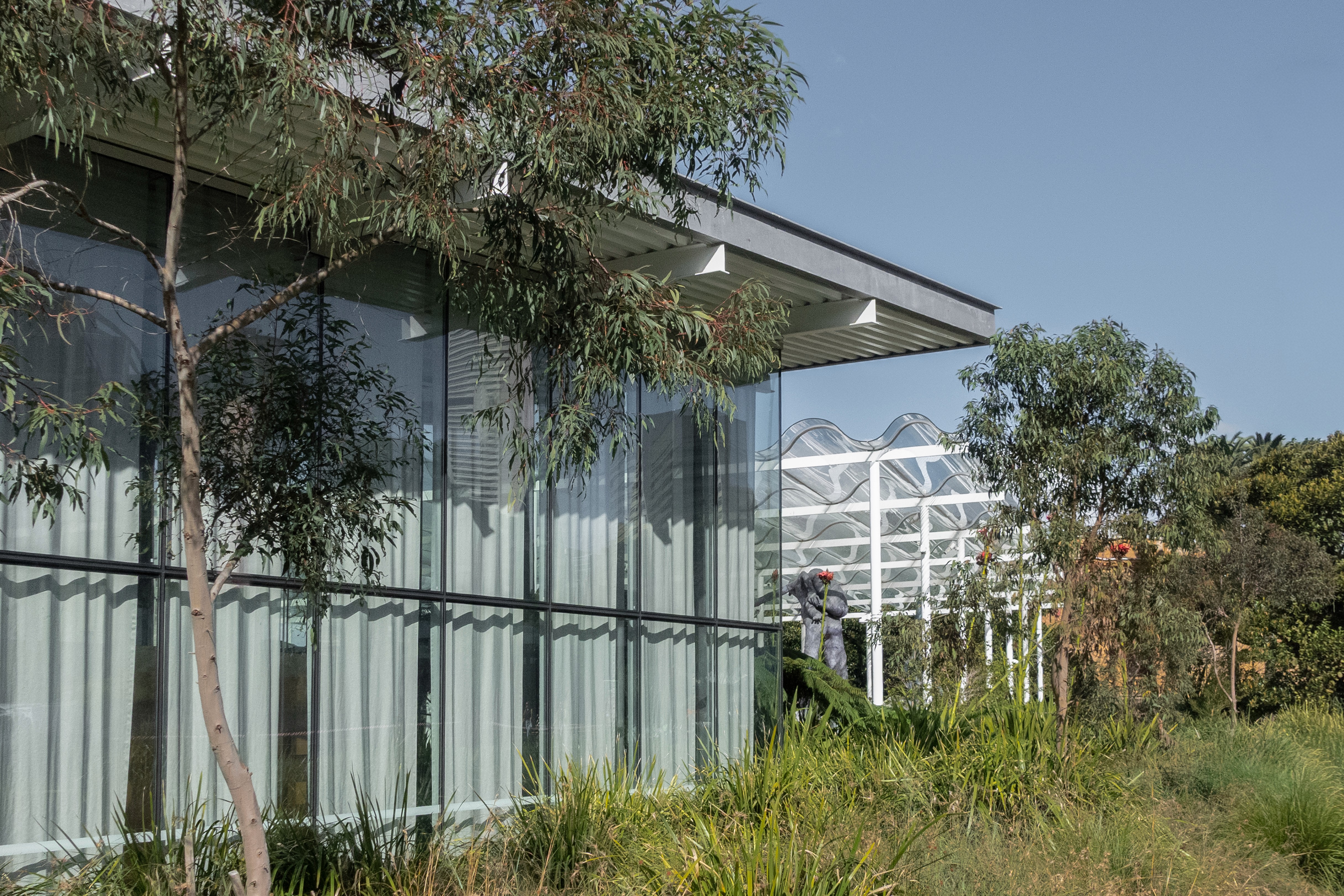
In photo: Sydney Modern's architecture extends beyond the gallery walls. Glass pavilions sit lightly within a landscape of native planting, reinforcing SANAA's vision of a cultural institution that feels connected to its surroundings rather than separated from them.
Great public architecture is remembered through experience.
It can be seen in the movement of people through the architecture, their engagement with its tactile qualities, and the way it integrates with its environment.
This concept shaped the design of the Sydney Modern extension of the Art Gallery of New South Wales.
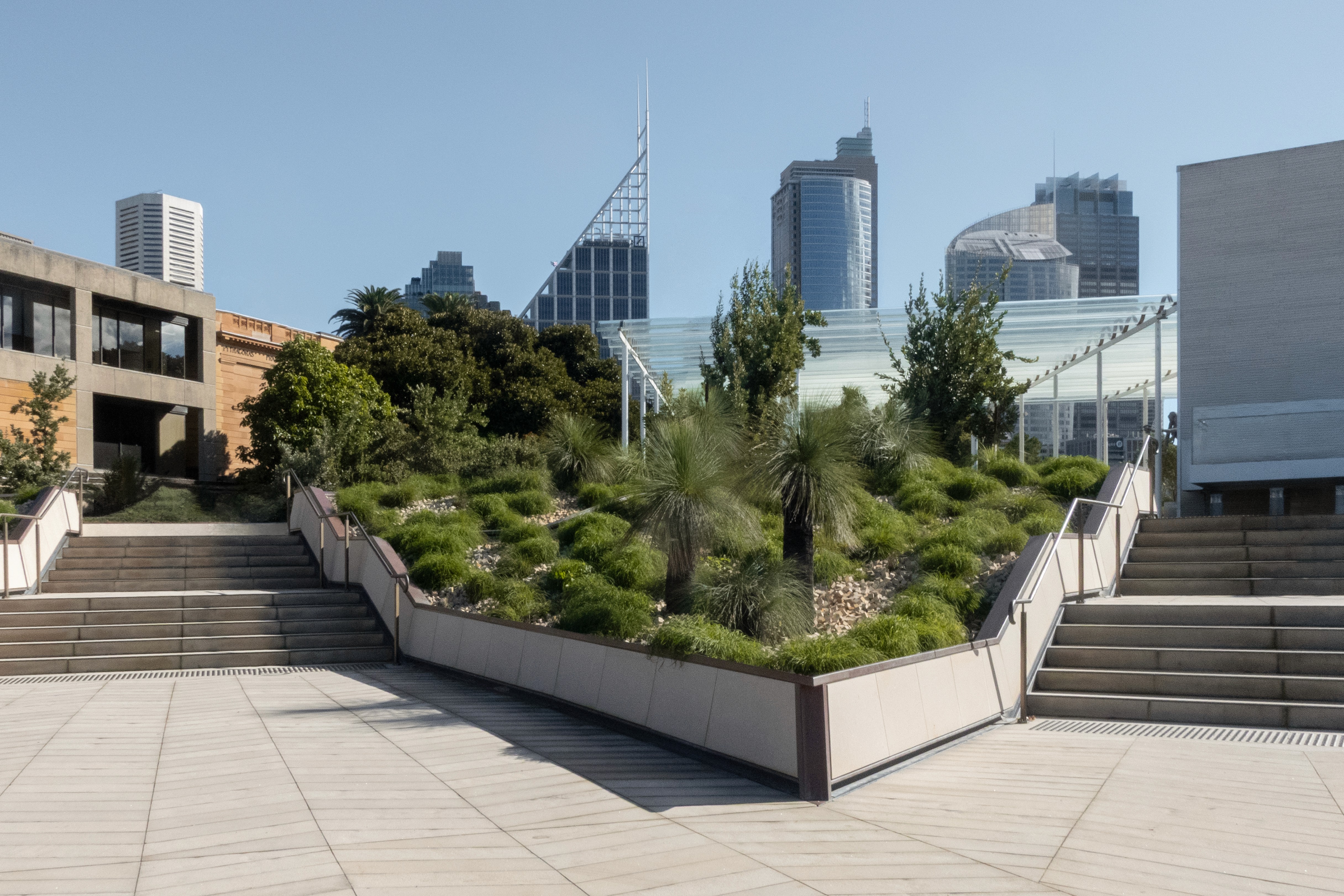
In photo: More than an extension to the gallery, Sydney Modern was conceived as part of the city's public realm. Terraced landscapes, open circulation routes, and elevated garden spaces create connections between art, architecture, and the surrounding urban environment.
Developed by Pritzker Prize-winning firm SANAA, the building serves not only as a gallery of international standing but also as an engaging civic space. For architectural photographers, capturing a project of this scale isn't just about documenting a building; it's about capturing the atmosphere and the way design shapes public life.
Working with Light and Openness: The SANAA Aesthetic
A defining feature of Sydney Modern is its transparency. With expansive glass façades and a seamless connection to Sydney Harbour, the building is a masterclass in openness, a hallmark of SANAA's design language, which prioritises lightness, restraint, and a soft blurring of inside and outside.
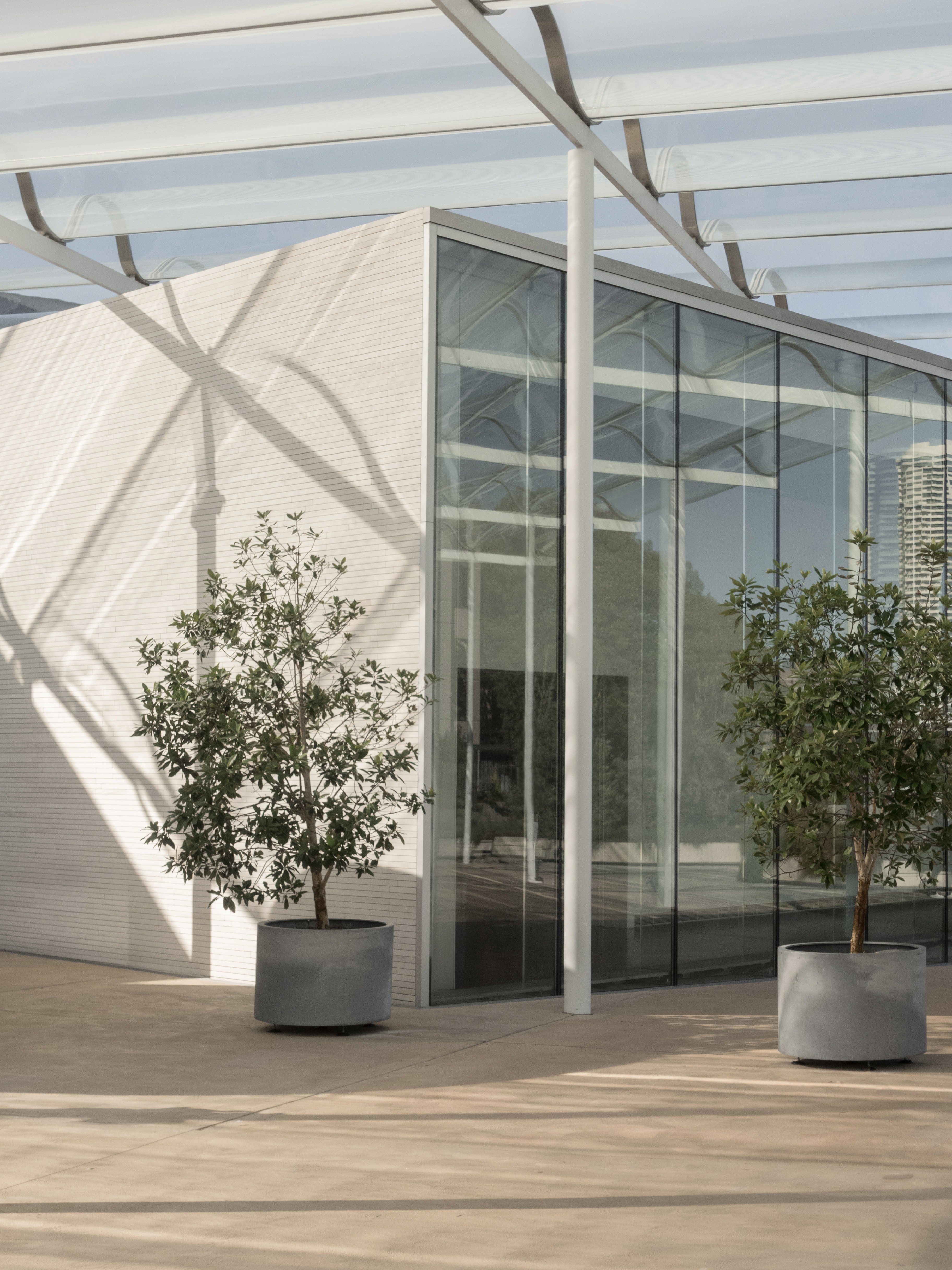
In photo: Light becomes a building material in its own right. The interplay of reflection, shadow, and transparency reveals the layered spatial quality of Sydney Modern while reinforcing SANAA's characteristic sense of lightness and restraint.
When photographing a space this fluid, the challenge is less about finding dramatic angles and more about reading the light and flow of the space. The strongest images commonly emerge when we allow scale and mood to reveal themselves naturally.
The Golden Hour Advantage. The design rewards photographers who chase the soft hours. Early mornings and late afternoons cast a gentler, lower-angle light that tames reflections on the glass and allows the interiors to settle into a quiet, even glow.
The Power of Negative Space. While wide-angle lenses are essential for capturing the openness and scale of the space, the composition must also be well-considered. We prioritise letting negative space do the heavy lifting, resisting the urge to fill every corner allows the building's calm, balanced geometry to breathe.
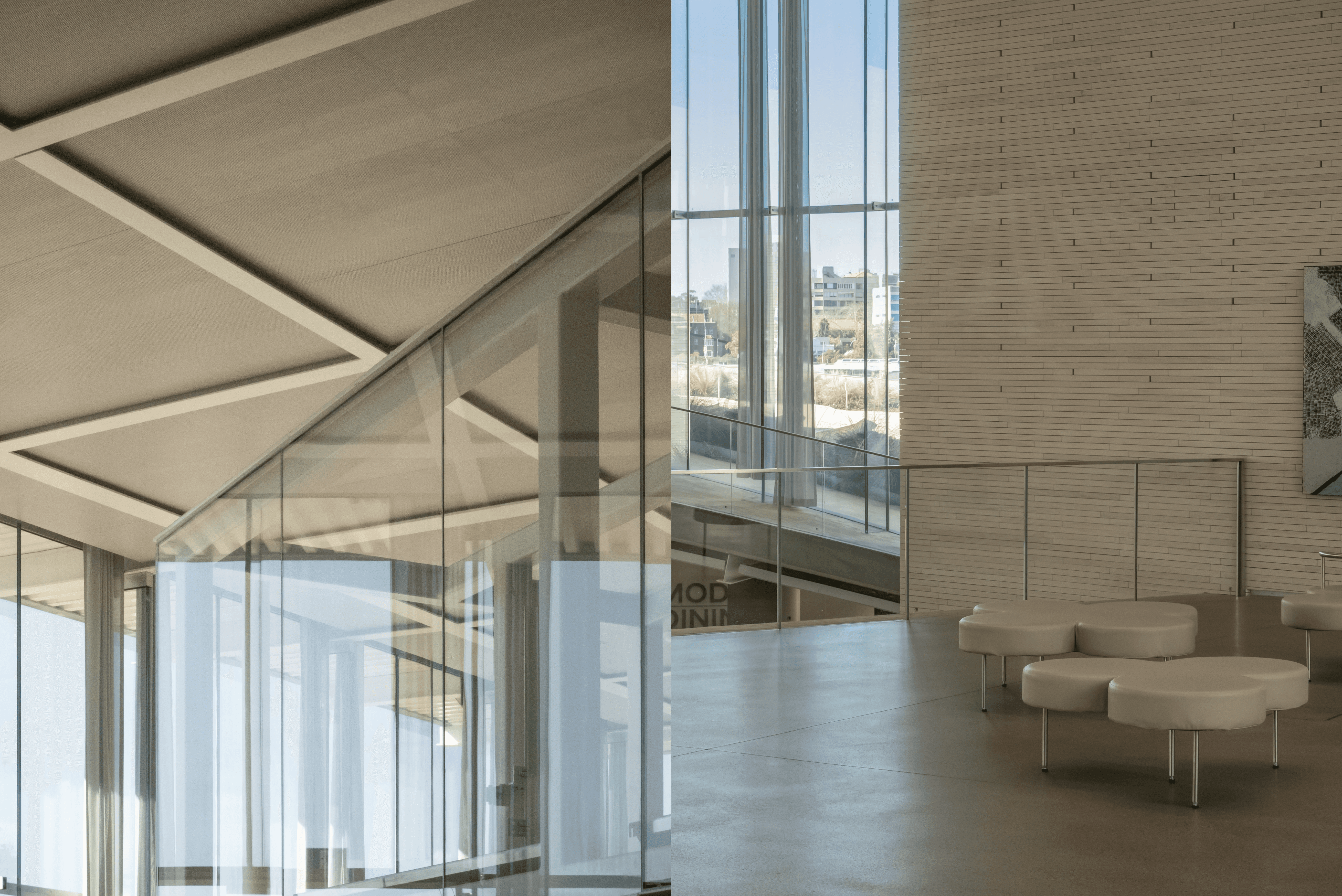
In photo: Transparency at Sydney Modern is not limited to the façade. Layers of glass, structure, and reflected light create a sense of visual continuity that extends throughout the interior. By embracing negative space and restrained detailing, the architecture allows light and volume to become the dominant elements of the experience.
Capturing the Dialogue Between Heritage and Contemporary Design
Sydney Modern was designed as a conversation between the original 19th-century gallery and the 21st-century pavilions.
The contrast is striking: the weighted, sandstone dignity of the original building sits in dialogue with the lightness of SANAA's new structure.
As photographers, our role is to document this transition.
We look for threshold moments, the points where materials meet and the architectural rhythm shifts from old to new without breaking the visitor's experience.
People as the Scale: Why Movement Matters
Public architecture is best understood through the people who use it. At Sydney Modern, visitors bring the space to life; communicating scale, movement, and atmosphere in ways the architecture alone cannot.
In our work, we believe people belong in the frame. Moments of gathering, pause, and circulation reveal the building's civic character and ground each image in the everyday rhythm of the space.
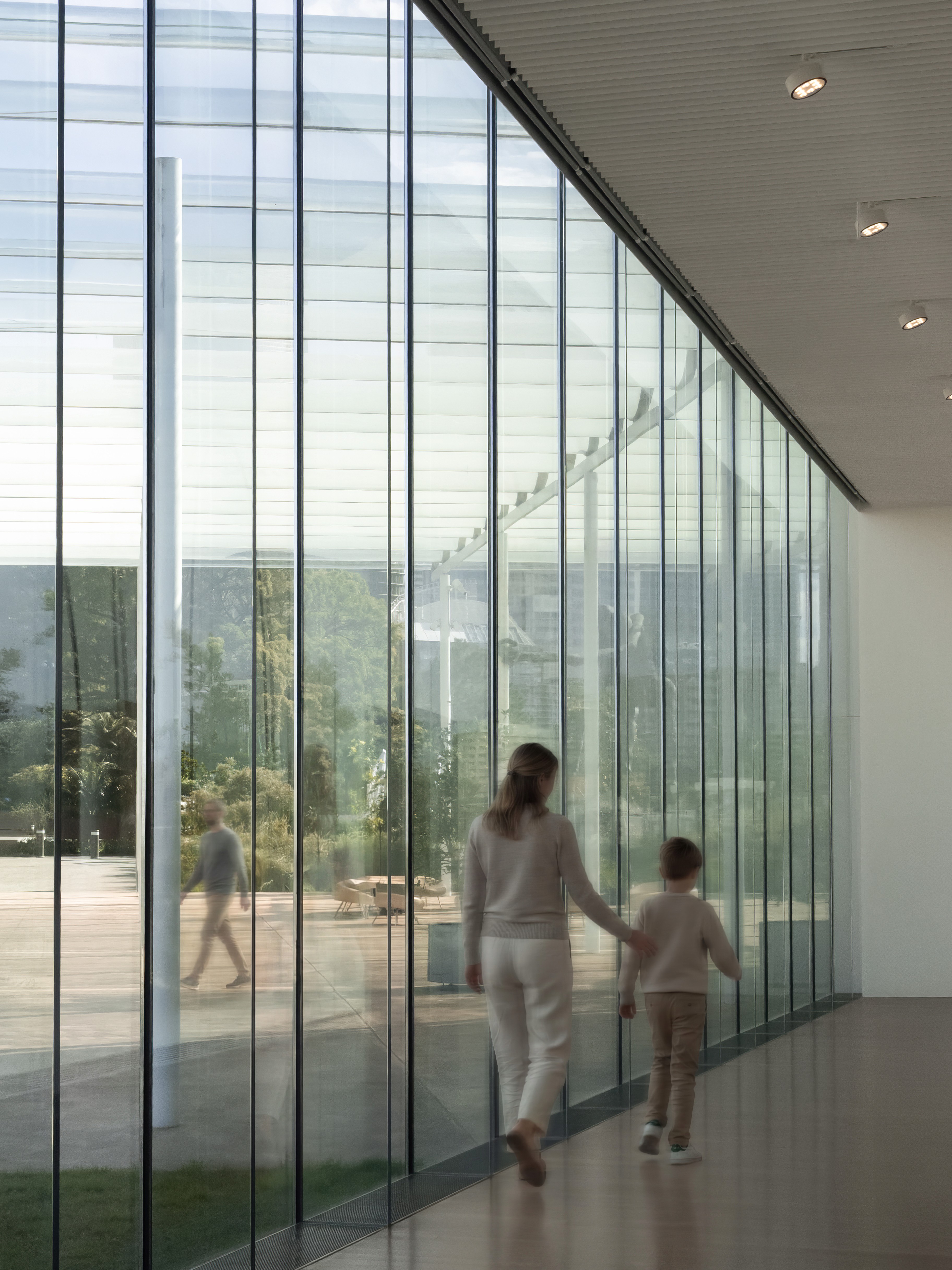
In photo: Sydney Modern's openness extends beyond its architecture to the experience it creates. Continuous views, natural light, and intuitive circulation encourage visitors to move comfortably through the space, transforming the gallery into a welcoming public destination.
Patience is also part of our process. The strongest compositions often require waiting, letting the space fill, settle, and shift until a frame quietly reveals itself.
The goal is never just to photograph a building. It's to photograph how people live within it.
Grounded in Country: Photographing Culture and Identity
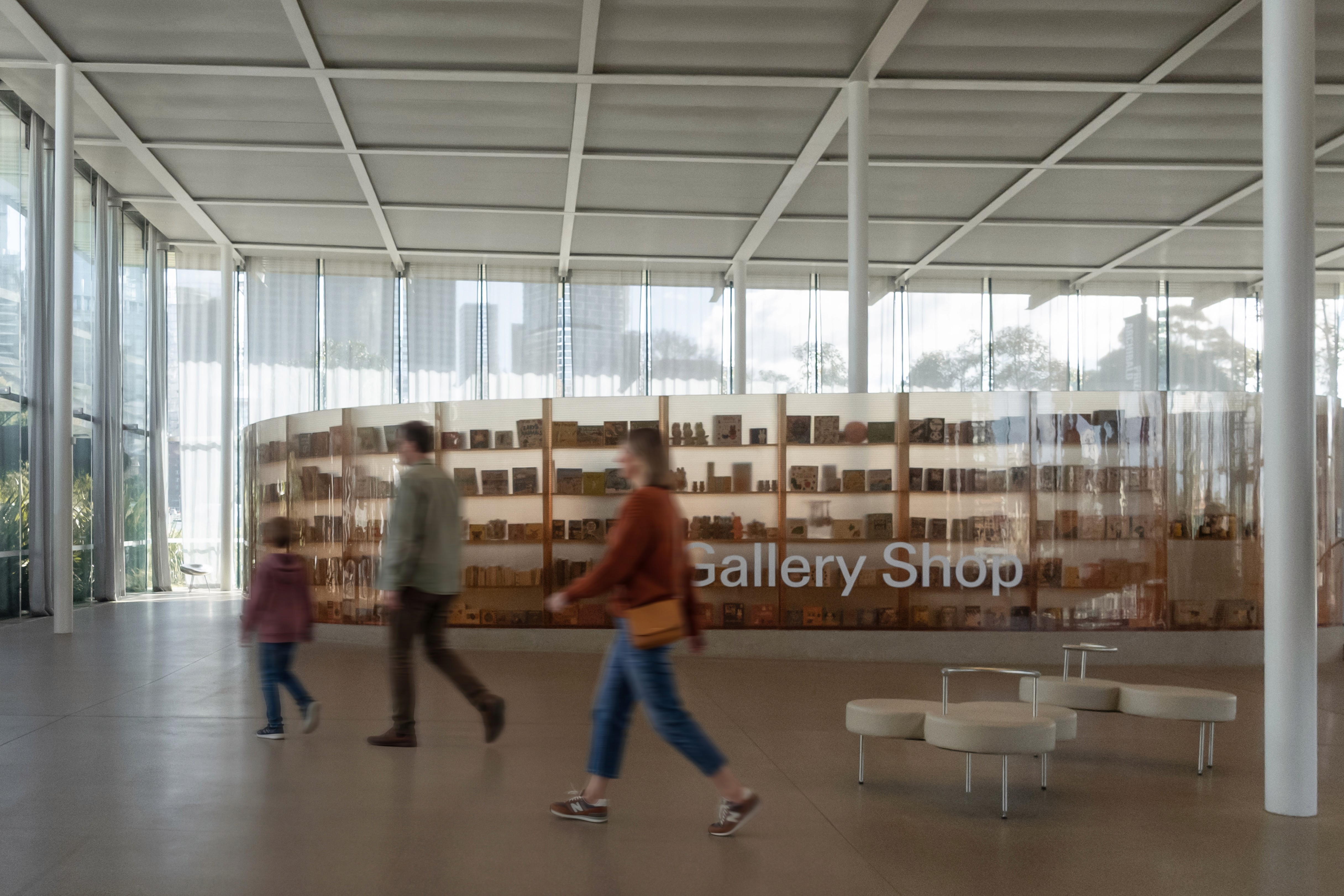
In photo: Architecture plays a supporting role in shaping cultural identity. By prioritising openness, accessibility, and human experience, Sydney Modern creates spaces where stories, artworks, and communities can be encountered on their own terms.
In a significant move for Australian culture, the two buildings of the Art Gallery of New South Wales were formally given Aboriginal names: Naala Badu ("seeing waters") for the new Sydney Modern building, and Naala Nura ("seeing Country") for the original gallery.
The naming reflects the project's connection to Gadigal Country and adds another layer to how the architecture is understood and experienced.
This cultural connection is also visible throughout the gallery spaces, particularly within the Yiribana Gallery dedicated to Aboriginal and Torres Strait Islander art.
Here, the architecture steps back, acting as a vessel for the stories within. Our focus shifts to materiality and the quiet rhythm of the room, ensuring the architecture holds the experience rather than headlining it.
Photography as Civic Storytelling
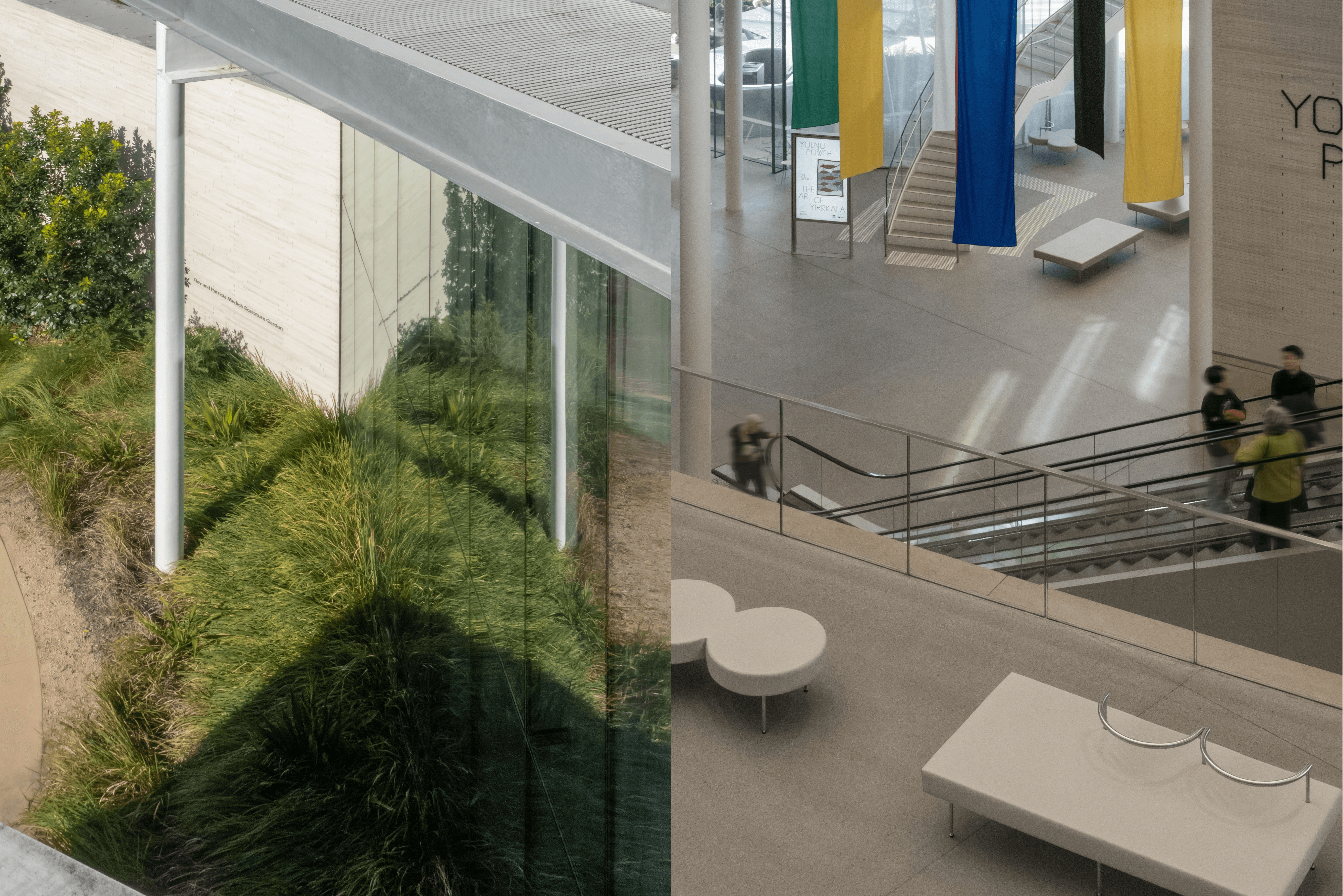
In photo: Civic architecture is defined not only by its form, but by the experiences it enables. By capturing the intersection of landscape, circulation, and public activity, photography reveals how Sydney Modern functions as a shared cultural space within the city.
Long after a building opens, photography continues to shape how it lives in the public imagination. The images that endure aren't always the grandest, they are the ones that quietly hold the building's meaning for years to come.
Sydney Modern belongs to the city and people of Sydney. As we document its evolution, our mission is to create a visual record that honours the architecture's relationship with the land, the light, the bay, and the public.
That same commitment shapes everything we do. Great architecture deserves to be seen through a lens of purpose and place, and if you're looking to translate your design into a lasting visual narrative, we're here to help. Get in touch.
[ Other magazine ]